
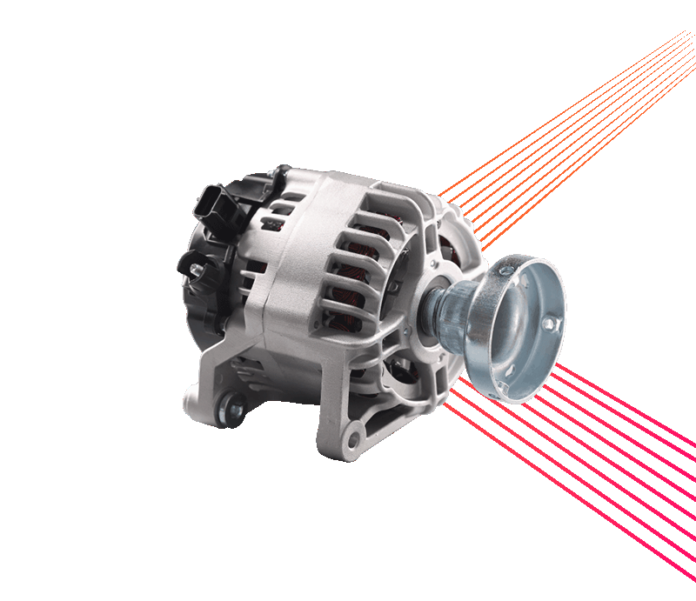
Motor control systems play a pivotal role in industries ranging from automotive to manufacturing and beyond. With advancements in technology, motor control solutions have evolved to deliver more efficient, reliable, and precise performance. This blog delves into the world of motor control, highlighting key solutions for motor control and drive design, and providing insights into how these technologies are shaping modern industries.
What is Motor Control?
Motor control refers to the techniques and systems used to operate and regulate electric motors. Motors are integral components in almost every modern mechanical system. Therefore, controlling their speed, direction, torque, and position is crucial for optimizing system performance.
Motor control solutions help to:
- Adjust motor speed and torque
- Control motor direction (forward, reverse)
- Manage motor braking
- Provide precision in motion (e.g., robotics and CNC machines)
Efficient motor control ensures that motors operate in a manner that maximizes energy savings, reduces wear and tear, and meets the specific needs of an application.
The Role of Motor Drives in Control Solutions
Motor drives are key components in motor control systems. They provide the necessary electrical signals to control the operation of electric motors. Motor drives typically include:
- Power electronics: Convert input power into the right form for the motor (AC, DC, or variable frequency).
- Control algorithms: Provide intelligence to ensure that the motor operates efficiently under varying conditions.
- Feedback systems: Monitor the motor’s performance and provide data to the control system for real-time adjustments.
Motor drive solutions often include features like speed regulation, position control, and torque regulation, which are critical for applications requiring precise motion control.
Motor Control and Drive Design Solutions
The design of motor control and drive systems depends on various factors, such as the type of motor, the application, and the operating environment. Below are some key considerations for designing motor control and drive solutions:
1. Motor Type Selection
The choice of motor determines the type of control strategy used. Motors are generally categorized as:
- AC Motors (Alternating Current): Widely used for applications requiring high efficiency and constant speed, such as HVAC systems or industrial machinery.
- Induction motors: Common in industrial applications due to their robustness.
- Synchronous motors: Often used where precise speed and position control are required.
- DC Motors (Direct Current): Ideal for applications requiring variable speed and precise control, such as robotics and electric vehicles.
- Brushed DC motors: Known for simplicity and ease of control but less efficient.
- Brushless DC motors: Offer higher efficiency and reliability, commonly used in high-performance applications.
- Step Motors: Often used in applications that require precise positioning, such as in robotics, CNC machines, and medical devices.
- Servo Motors: Used in high-precision applications such as robotics and automation where exact positioning and speed control are required.
2. Control Strategy
The design of motor control strategies varies with the motor type and application. Common motor control strategies include:
- Open-loop control: This strategy is used when the feedback from the motor is not essential. It’s simpler and more cost-effective but less precise.
- Closed-loop control: Utilizes feedback (e.g., from encoders or resolvers) to constantly adjust the motor’s behavior. This is often used in high-precision applications such as robotics and CNC machines.
- Vector Control (Field-Oriented Control – FOC): Primarily used for AC motors, this strategy optimizes performance by decoupling the motor’s torque and flux control, offering more efficient and precise operation.
- Pulse Width Modulation (PWM): A common technique for controlling the power delivered to the motor, PWM controls the motor’s speed and torque by varying the duty cycle of a square wave signal.
3. Motor Drive Selection
The motor drive acts as the interface between the motor and the power source, converting electrical energy into the appropriate form for the motor. Choosing the right motor drive involves several factors:
- Voltage and current requirements: Matching the motor drive’s voltage and current ratings to those of the motor ensures compatibility and optimal performance.
- Control features: Depending on the application, you may need a motor drive with advanced features like regenerative braking, fault detection, or remote control options.
- Efficiency considerations: More energy-efficient motor drives contribute to lower operational costs and improved overall system performance.
- Regenerative capabilities: In applications where motors are used in dynamic loads, regenerative braking can feed energy back into the system, improving energy efficiency.
4. Motor Protection and Safety
Ensuring the longevity and safety of motor systems is crucial. Effective motor control solutions incorporate protection mechanisms like:
- Overcurrent protection: Prevents the motor from drawing excessive current that could damage it.
- Overvoltage and undervoltage protection: Ensures the motor drive operates within safe voltage levels, preventing system failures.
- Thermal protection: Monitors motor temperature to prevent overheating, which could lead to failure.
- Short circuit and ground fault detection: Safeguards against electrical faults that could harm the motor or associated components.
5. Integration with Control Systems
Many industries today require integrated control systems that allow for seamless communication between the motor control system and other elements like PLCs (Programmable Logic Controllers), HMIs (Human Machine Interfaces), or SCADA systems (Supervisory Control and Data Acquisition).
Integration with higher-level control systems enables real-time monitoring, remote diagnostics, and control over complex systems, offering greater flexibility and automation. Many modern motor control solutions are designed to be compatible with these systems for easier integration into larger production processes.
Applications of Motor Control Solutions
Motor control and drive design solutions are employed across a variety of industries and applications, including:
- Automotive: Electric vehicles, power steering, window lifts, and more.
- Industrial Automation: Conveyor belts, robotics, CNC machines, and packaging systems.
- HVAC: Motors for fans, pumps, and compressors in heating, ventilation, and air conditioning systems.
- Renewable Energy: Wind turbines and solar power systems that use motor drives for efficiency and control.
- Home Appliances: Dishwashers, washing machines, and refrigerators use motor drives to improve energy efficiency and performance.
- Medical Devices: Precise motor control is essential in devices like prosthetics, ventilators, and imaging equipment.
The Future of Motor Control Solutions
With the rapid development of technologies like AI and IoT, the future of motor control is more exciting than ever. Intelligent motor control systems are becoming increasingly autonomous, self-learning, and capable of adjusting to dynamic environments. Some key trends include:
- IoT Integration: Remote monitoring and diagnostics of motor control systems through IoT will lead to more proactive maintenance and optimized operations.
- Energy Efficiency: Growing pressure to reduce energy consumption will drive innovations in motor control solutions, such as advanced regenerative braking systems and variable-speed drives.
- AI-driven Control: Artificial intelligence can enable predictive maintenance and performance optimization based on real-time data analysis.
Conclusion
Motor control and drive design solutions are critical for the smooth operation of countless systems in modern life. Whether you’re designing an industrial robot, an electric car, or a home appliance, understanding motor control is essential. By carefully selecting the right motor type, control strategy, and drive design, engineers can optimize efficiency, reduce costs, and enhance performance.
As technology continues to evolve, motor control systems will only become more advanced, with better integration, more precise control, and improved energy efficiency. Keeping an eye on these advancements will ensure that your motor control systems are always at the forefront of innovation.