
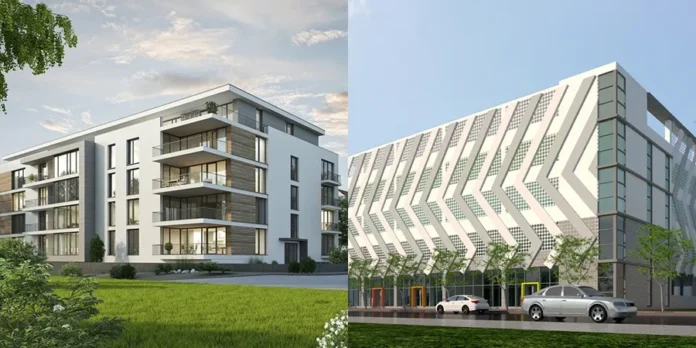
To grasp the relationship between 3D visualization in architecture and construction, we must first examine the phases of the construction process. At the outset, architects and engineers create the building design. The relevant authorities subsequently sanction the project, acquire materials and equipment, and employ labor. Ultimately, architectural visualization services utilize the digital models, schematics, and blueprints produced during the design phase and help revolutionize construction workers’ work, providing benefits beyond tangible items’ strength.
The benefits of 3D Modeling in Construction
Considering the extensive application and assessment that 3D rendering services and software have experienced in the construction sector, they have been remarkably successful. Construction professionals from various companies and projects who have engaged directly with different forms of rendering in construction have pinpointed several significant benefits that these programs provide to individuals in this field, and the primary ones are noted below.
A high rate of project approval
For any construction endeavor to progress, it must initially gain municipal endorsement, permits, and financing. The success greatly depends on the project that presents the strength of its benefits. As a result, accurate 3D architectural visualization services help increase the project’s attractiveness, facilitating a clearer understanding of the structure’s presence for inspectors, investors, and urban planners compared to hand-drawn depictions. Although the details and criteria are significant in the project’s success, employing 3D architectural rendering services provides a crucial advantage.
A versatile reference
Construction workers try to familiarize themselves with a project and its layout before beginning operations. Yet, they retain all the essential architectural references that are handy throughout the construction phase. This is due to the need to revisit information they may not have memorized or entirely focused on during their initial document review. Managing a physical document, transporting it around the construction site, deciphering intricate details, and viewing a building plan from specific angles can be cumbersome. Conversely, 3D architectural visualization studio models are available on various devices, can be rotated and zoomed in on, and are less likely to be lost among other paperwork.
Enhanced collaboration between teams and experts
One disadvantage of retaining construction plans and building designs is that limited copies are generally available and distributed only to essential individuals. With architectural rendering services, many more participants involved in the construction process can access the plans, and the software also facilitates the distribution of tasks and organization on-site among different teams and groups. Exterior and interior 3D architectural visualization will provide the same perspective and scale benefits, while additional built-in features within the software will assist staff in collaborating more effectively.
Improved building quality
While many of us aim for perfection, everyone makes mistakes. That is why even the models produced by the top architects undergo thorough checks to uncover errors, inconsistencies, and potential strategic issues. Nevertheless, even with careful evaluation, some flaws can transition from the architect’s canvas to construction. The chances of this occurring are significantly reduced with 3D models, as most home rendering software employed to create them utilizes precise calculations, line projections, and adherence to building standards to diminish human error’s impact greatly. Overall, these fail-safe features guarantee a higher quality of construction.
Conclusion
Three critical requirements must be fulfilled to incorporate 3D into construction effectively: a functional 3D model, suitable software for viewing and modifying the model, and hardware (such as tablets, computers, or mobile devices) for the construction team to access the visualizations. While an initial investment of time and resources is required to satisfy these requirements, the long-term advantages of utilizing 3D models, as previously mentioned, justify the investment. If you do not plan to produce the 3D model, you may be looking for the top 3D architectural visualization firms to help with this project.